Public vs Private. The definition of service.

Imagine walking into a store like Marks and Spencer’s. You pick up a product, interact with the cashier, and leave. That’s a service, right?
Now, imagine trying to get a passport renewed, apply for healthcare, or receive social services. These are also services, but they’re vastly more complex. In the public sector, a service is not just a transaction; it’s a lifeline, a safety net, and sometimes even a matter of life and death.
In government, defining a service is like trying to describe the entire ecosystem of a forest rather than a single tree. Unlike a straightforward retail experience, a government service involves numerous interconnected parts. Think of the services like engines and the cogs inside as the products. It’s not just about what the user sees or experiences—it’s about everything that happens behind the scenes to make that experience possible.
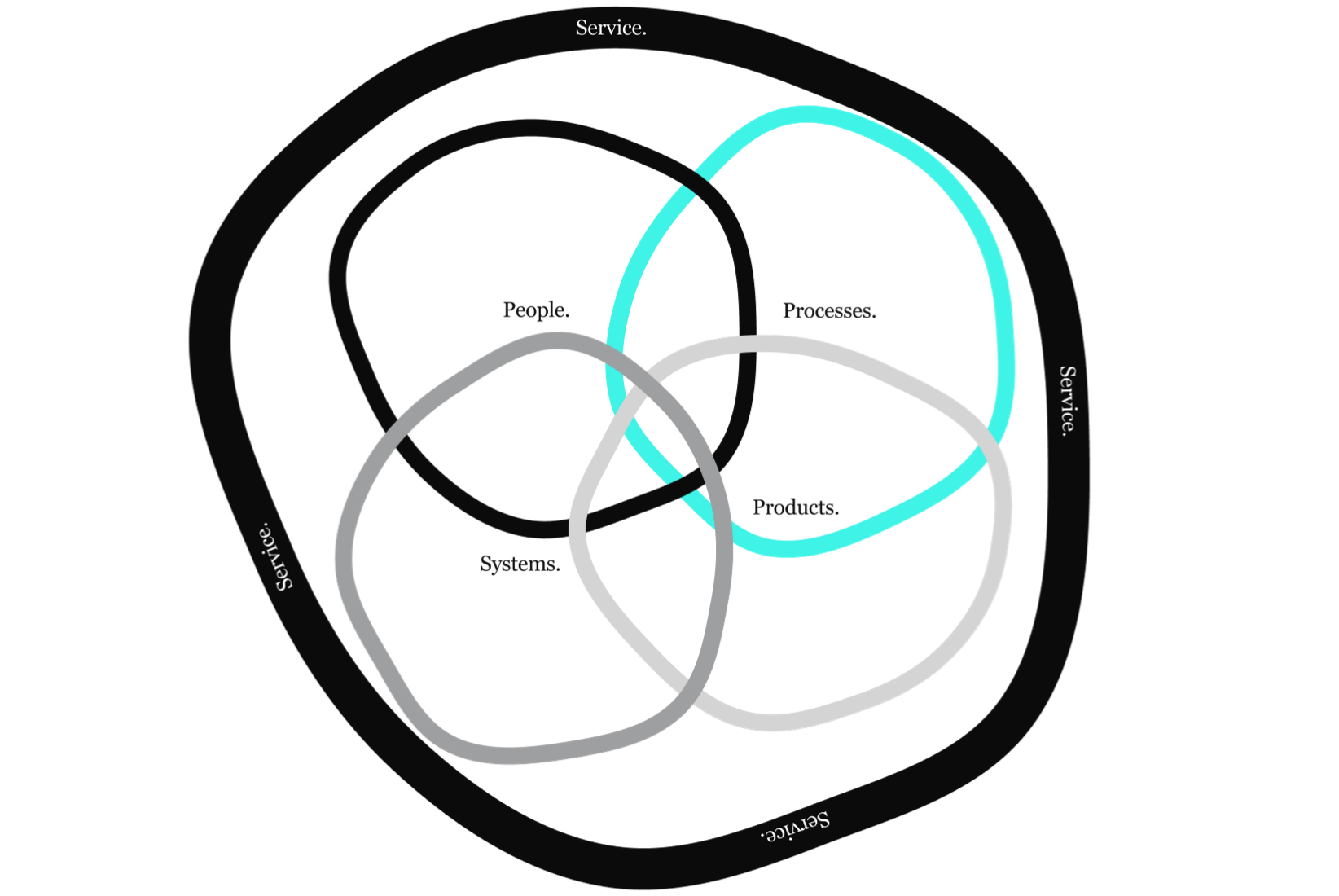
01 People
The diverse teams working together, from policymakers to frontline staff.
02 Processes
The procedures and workflows that ensure consistency and quality.
03 Products
Tangible outcomes like a renewed passport, a healthcare plan, or educational resources.
04 Systems
The technology and infrastructure that support service delivery.
When these elements come together, they don’t just create a service; they create a platform—a foundation upon which further services can be built and improved.
The Role of Policy
and Support Functions.
A government service is like the visible part of a stage performance. Behind the scenes, a whole team—finance, HR, legal, facilities—works to support it. At the heart of it all is the script: the policies that shape every aspect of the service, ensuring it all runs smoothly In government, services don’t exist in a vacuum; they are shaped by laws, regulations, and policies that guide every aspect of their delivery.
For example, consider the service of public education. The visible part might be the classroom experience, but behind it are policies on curriculum, funding decisions made by finance teams, HR processes for hiring teachers, and even the maintenance staff ensuring the buildings are safe.
How do you define a
service in the public sector?
It’s not a simple transaction or a single outcome. It’s a collective of all the elements—people, processes, products, systems, policies, and support functions—that work together to meet public needs.
In the private sector, a service might be something that can be clearly defined and isolated, like customer service or product delivery. But in government, a service is more like an intricate web. Every part is interconnected, and changing one part often affects the whole.
Why this matters.
Understanding this complexity is crucial. It helps us appreciate the challenges involved in delivering public services and why even small improvements can have a big impact. It also helps us recognise that a service is not just about the end product—it’s about the entire ecosystem that makes that product possible.
The next time you think about what a service is, try to look beyond the surface. Whether in government or the private sector, services are more than just transactions—they’re the culmination of countless efforts, systems, and policies working together.
You may also like these.