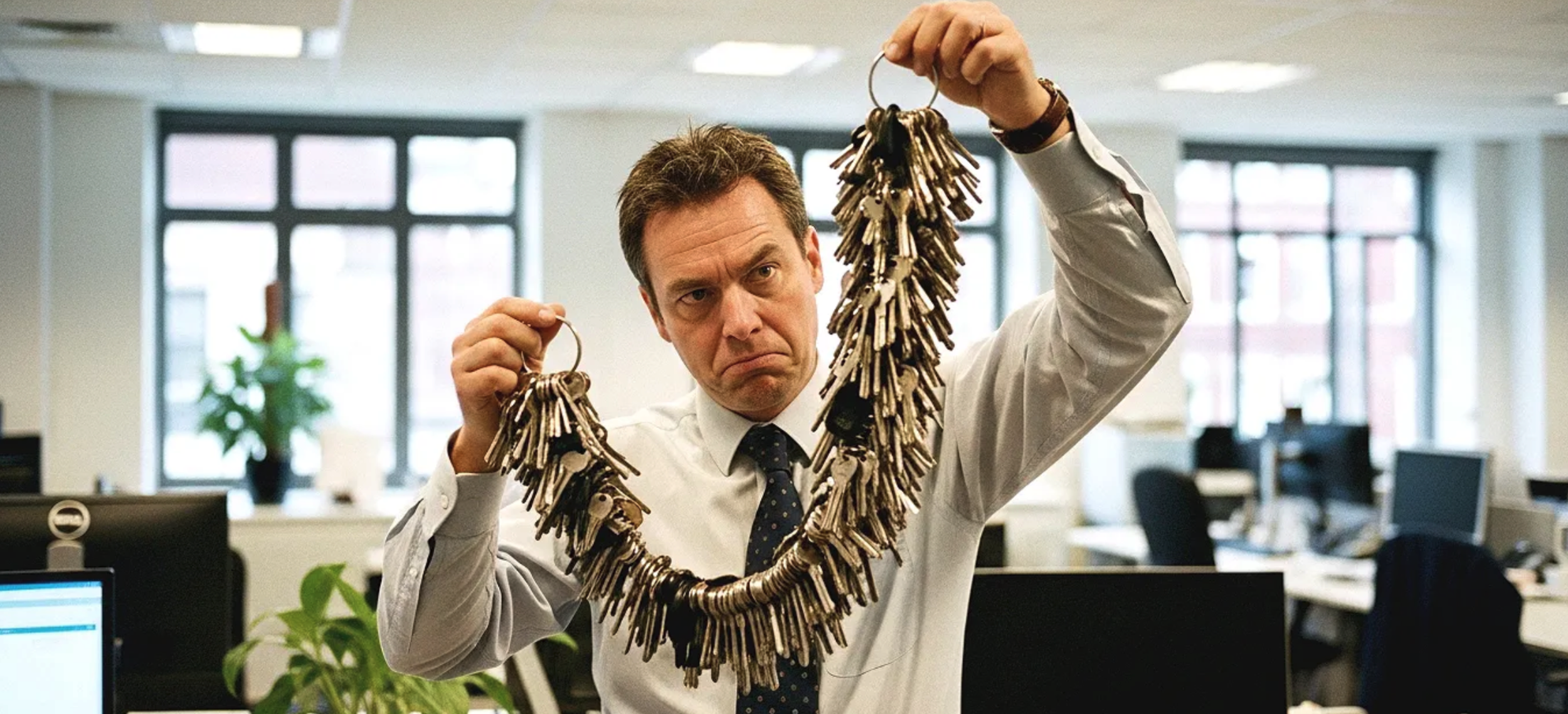
Approving a Nuclear Power Station is weirdly similar to building a kitchen extension.

The Planning Inspectorate (PINS) has one of the strangest Mondays-to-Tuesdays in government.
On Monday, someone wants a slightly bigger kitchen. On Tuesday, someone wants permission for a nuclear power station. From the outside, these feel like completely different universes. One is domestic and local; the other is national, complex, and politically sensitive.
But when we partnered with PINS to modernise their services, it became clear that, once you look past decades of legal frameworks and accumulated processes, both journeys follow the same human story.
Big decision or small extension, the stakes differ, but the workflow shares a familiar rhythm.
The Reality
of “Shadow IT”
In a system that has evolved over decades, staff naturally find ways to keep the work flowing. Tactical spreadsheets, side-systems, and bespoke tools had emerged quietly over the years. This did not happen because anyone wanted shortcuts, but because dedicated teams were ensuring nothing fell through the cracks.
We call it “shadow IT,” but it is really a testament to the ingenuity and resilience of PINS staff. These workarounds were not a problem; they were evidence of a workforce committed to keeping national planning running smoothly despite the inherited complexity.
Finding the Pattern
No One Thought Existed
PINS handles nine distinct types of casework, each with its own legal framework and particular demands. You have enforcement appeals with passionate neighbours, Rights of Way disputes, and Local Plans with tight schedules and wide public impact.
At first glance, standardising this work seems impossible. Yet mapping the end-to-end journey across every case type revealed a surprising truth: every case, whether it is a kitchen extension or a nuclear power plant follows the same 8 Core Steps:
1. Customer Submission. (The ask.)
Someone hits “submit,” whether it is a modest kitchen or a multi-billion-pound infrastructure project.
2. Receive Submission.
The system formally acknowledges the intake of the case
3. Validation. (Ensuring accuracy)
Staff check that submissions meet minimum requirements before they enter the system.
4. Allocation & Scheduling.
Matching cases to the right experts based on complexity, experience, and availability.
5. Prepare & Conduct Event. (The hearing or site visit.)
This is when the work is examined and understood on the ground.
6. Decision. (The outcome.)
A formal determination or report concludes the case.
7. Post Decision.
Handling the administrative wrap-up and any immediate challenges.
8. Invoicing.
Closing the loop financially.
This insight transformed the approach. Instead of nine bespoke systems, one adaptable service — flexible yet anchored to these eight steps — was enough to support all case types.
Designing for Real People,
Not Abstract Users.
In government projects, it’s easy to get lost talking about “users” in the abstract. But this service had to work for real people, each with very specific headaches.
Instead of generic requirements, we focused on the distinct roles discovered during research:
The Validator
Acts as the first line of defence, checking that information is accurate before it clogs up the system.
The Programmer
Faces a complex logic puzzle: matching cases to inspectors with the right level of experience based on complexity scores.
The Case Officer
Manages the start of each case, gathering forms from local authorities and collecting comments from interested parties.
Under the previous system, even highly skilled inspectors sometimes had to wait for certain plans before they could begin work. The new service shifted the focus back to enabling these experts to do what they do best: make sound, timely decisions.
Letting Experts
Be Experts.
The goal was never to disrupt PINS or reinvent government work for the sake of it. It was simple: clear the path so that experts can focus on decision-making rather than workflow friction.
By unifying the process, we moved away from rigid resource reservation and towards a flexible system where work flows to the people best placed to handle it. That is not just faster, but creates space for professional judgment, creativity, and insight.
Three Questions for
the “Too Complex” Department.
If you work in a large organisation wrestling with legacy systems, PINS’s story will feel familiar. Before you commission another heavyweight overhaul, ask yourself these three questions:
1. Where are the spreadsheets hiding?
Skip the polished process maps. Search for the “shadow IT” , the secret survival systems built by your Sarahs and Toms. That is where your real requirements live.
2. Are you digitising the waiting room?
At PINS, inspectors sat “reserved” for work that wasn’t arriving. Digitising that process just makes the waiting more efficient. Ask yourself: are you managing the backlog or clearing the path?
3. What is your Golden Thread?
Yes, your departments have 100 ways they are different. What is the one way they are the same? PINS had nine worlds linked by eight steps. Find your truth, the thing everything hangs off.
What next?
Have you seen similar hidden patterns in your own organisation? Or uncovered shadow IT that is secretly keeping things moving? If so, we’d love to hear your story and explore how a fresh perspective can turn complexity into clarity
You may also like these.